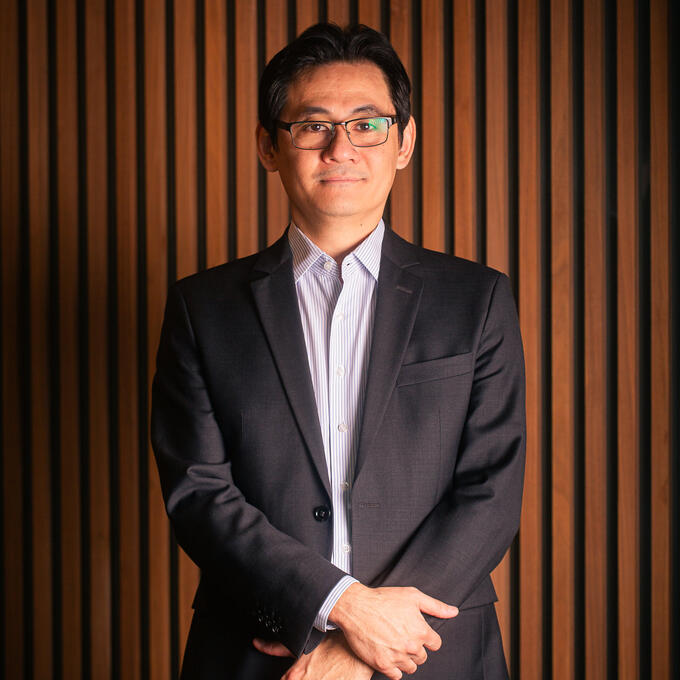

The Brazilian stock market approached 200,000 points in 2026, supported by a strong inflow of foreign capital. The movement, however, was not enough to reposition the country among the strategic destinations for large global investors, according to Eric Hatisuka, CIO of Mirabaud Family Office Brasil.
“We have been walking towards irrelevance,” states the executive, who also leads the local investment committee for the Swiss group.
The recent market reversal helps illustrate this assessment. After reaching a year-high of 198,657 points, the Ibovespa closed this Tuesday (11th) at 167,874 points, a 15.5% drop. In August alone, foreign investors withdrew R$ 5.5 billion from the stock exchange up to the 7th. The accumulated balance for 2026 remains positive at R$ 35.5 billion, concentrated mainly in the first quarter, according to B3 data.
The correction cannot be attributed exclusively to the departure of these investors. Interest rates, the electoral scenario, commodity prices, corporate earnings, and the international environment also influence the index. For Hatisuka, however, the speed at which money flowed in and began flowing out shows how small of a share Brazil occupies in global portfolios.
The country represents 4.15% of the MSCI Emerging Markets, the benchmark index for emerging markets. Since emerging markets account for about 11% of the MSCI ACWI—which gathers stocks from both developed and emerging countries—Brazil's direct weight in the global index stands around 0.5% (0.59% in the most recent MSCI data)—less than one-hundredth of the total.
In practice, a large international manager does not need to significantly alter their portfolio to cause a major movement in the B3. Likewise, they can reduce their exposure to the country without that decision producing a material effect on their global portfolio.
In the CIO's assessment, the inflow observed at the beginning of 2026 had more of a cyclical than a structural nature. Brazil benefited from the search for emerging markets and assets traded at prices considered cheap, but it did not present changes capable of sustaining a permanent allocation.
“Brazil is not in an investment cycle, and it is not in a reform cycle. On the contrary, we killed all reforms and all conversations about reform. So, Brazil today is uninteresting.”
Why Foreigners Aren't Looking at Brazil
The small size of the market is not the only explanation. Not even Brazilian interest rates, which are among the highest in the world, would be enough to make the country structurally attractive to foreigners. The Copom reduced the Selic rate to 14% per year in August, a level still much higher than that observed in major economies.
The problem, according to Hatisuka, lies in the risk that a devaluation of the real could wipe out the returns accumulated by international investors. He cites the movement that occurred during the pandemic, when the dollar rose from the R$ 4 range to near R$ 6. A currency variation of this magnitude can consume several years of earnings obtained from Brazilian interest rates.
“For those on the outside, it means running an unnecessary risk of currency devaluation. So they end up not looking at it.”
This risk helps explain why Brazil receives little attention even within Mirabaud's own international portfolios. According to Hatisuka, teams based outside the country follow the Brazilian scenario, but their concerns are different, and interest in local assets remains limited, including in fixed income.
“We are very small.”
The Brazilian team incorporates the institution's international analyses and seeks to integrate the local and offshore portions of the portfolios. However, this does not mean that Brazil holds a relevant space in the group's global portfolios.
“So the bank's concerns abroad are different from ours here.”
For the Brazilian investor, the math is different. Since a significant portion of their income, expenses, and wealth is denominated in reals, high interest rates can compensate for inflation and the currency's loss of value over time. Foreigners, who calculate returns in dollars, might not receive the same compensation.
This difference helps explain one of the paradoxes of the Brazilian market: the same interest rate that makes fixed income attractive to those living in the country makes corporate financing more expensive and reduces long-term interest in variable income (equities).
The criticism of economic policy does not mean Hatisuka considers Brazil unviable for those who live or do business here. The distinction is between generating wealth in reals versus choosing the country as a destination for a global portfolio.
“Brazil is a good country to live in. Brazil is a good country to generate wealth, to generate business.”
The Diagnosis from Mirabaud's Letter
The assessment presented by Hatisuka in the interview is detailed further in the Brazil section of Mirabaud’s July monthly newsletter, which he authored. In the document, the CIO states that the pillars of the macroeconomic tripod are undergoing a “silent and gradual process of detrition.”
The tripod combines the inflation-targeting regime, fiscal balance, and a floating exchange rate. In the executive's view, the lack of coordination between fiscal and monetary policies shifts an excessive weight onto interest rates.
The letter argues that increased public spending pressures demand and inflation, which requires higher interest rates. The higher rates increase the cost of public debt, while the attempt to balance accounts primarily through higher tax collection reduces corporate profits and investment capacity.
In the interview, Hatisuka states that Brazilian business owners face high interest rates, a rising tax burden, and an exchange rate that reduces the competitiveness of national products abroad all at the same time.
“The Brazilian business owner is suffering on three fronts.”
The tax reform might simplify part of the system, according to him, but the number of exceptions and differentiated treatments threatens to reduce the efficiency gains initially expected. Hatisuka also considers that the persistence of tax credits may keep part of the legal conflicts between companies and the government alive.
In the letter, Mirabaud states that the continuous increase in the tax burden could “suffocate the private sector” and make doing business in the country progressively more disadvantageous. The document also says that rising production costs reduce industrialization and push Brazil “off the map of global supply chains.”
For Hatisuka, the ultimate effect of this combination is a recurring loss of competitiveness. When internal costs advance faster than productivity, currency devaluation ends up functioning as an adjustment mechanism, making the country cheaper in dollar terms once again.
More Fixed Income and Less Risk in Brazil
The diagnosis led Mirabaud to increase conservatism in its Brazilian portfolios. The firm already maintained a high allocation in fixed income, but it is now expanding exposure to floating-rate post-fixed titles and reducing risks in private credit.
“We are more conservative in terms of strategy.”
The asset manager stopped buying papers from companies considered more vulnerable and, at certain times, reduced capital raising efforts for its funds. The intention is to prevent a massive influx of resources from forcing the team to acquire assets that do not meet their risk criteria.
“What we essentially do is bet on the fixed income available in Brazil.”
The decision also reflects the impact of interest rates on companies. Elevated rates for a prolonged period increase the cost of rolling over debts and can lead highly leveraged companies into renegotiations or restructurings.
Mirabaud's Brazilian operation has approximately R$ 1.7 billion under management, according to Hatisuka. The structure combines wealth management and an asset management arm. The latter manages four funds: Mirabaud Tradition (R$ 252 million), Mirabaud Conviction (R$ 135 million), Mirabaud Icatu Previdência (R$ 21 million), and Mirabaud Debêntures Incentivadas (R$ 36 million). The goal is to reach R$ 600 million under management in this line throughout 2026. This integration allows credit analysis performed by the team to be utilized directly within wealth management client portfolios.
Equities Stay Abroad
The strategy changes when the money is outside of Brazil. Instead of replicating the domestic portfolio composition abroad, Mirabaud recommends that clients take advantage of the distinct characteristics of each market.
In Brazil, the firm concentrates most of its exposure in fixed income. Abroad, it utilizes equities, indexes, private equity, and other assets that find no equivalent in the Brazilian market.
“We have been acting and talking with clients to use the offshore portion to take on risk.”
Mirabaud invests in indexes like the S&P 500, American and European stocks, and private assets. Hatisuka notes that the firm had access to SpaceX while it was still a private company and maintains positions in other private businesses.
The allocation also follows sectoral criteria. Technology exposure is heavily concentrated in the United States, while Europe offers alternatives in sectors like the pharmaceutical industry and heavy engineering.
The management avoids sending money abroad just to reinvest it in dollar-denominated bonds issued by Brazilian companies. Although these assets sit in a different jurisdiction, the client would remain exposed to Brazil's underlying economic risk.
Whom Mirabaud Serves
The strategy is aimed at high-net-worth and ultra-high-net-worth investors. In Brazil, Mirabaud accepts clients with at least R$ 5 million in liquid assets. For an exclusively international portfolio, the reference value is US$ 2 million. When wealth is managed in an integrated manner, assets held across both jurisdictions can be evaluated together.
The proposal is to treat investments in Brazil and abroad as parts of a single, unified strategy, even though the operations remain legally separate. For regulatory reasons, the Brazilian entity does not recommend international products to clients who only hold accounts domestically; access to those assets is restricted to clients who already possess an offshore account. The local operation can, however, coordinate allocations alongside the account the client maintains abroad.
“Portfolio management is an integrated process. That is what we propose.”
Before selecting products, the team outlines wealth objectives, liquidity needs, risk profiles, and the desired allocation across currencies and markets.
“The products that are out there will compose an objective that comes before the product itself.”
Compensation comes from management or advisory fees charged directly to the client, rather than commissions from product sales. According to the CIO, this model reduces incentives to pitch applications based on distribution payouts.
“We are not product salespeople.”
Hatisuka states that the Brazilian client is still migrating from a transactional relationship, based on frequent product pitches, to a comprehensive wealth tracking model.
“And when you shift from a commission-based model to advisory or asset management, you change exactly which side of the table you are sitting on.”
Founded in Geneva in 1819 and still controlled by its founding family, the Mirabaud Group currently manages around 35 billion Swiss francs (US$ 43 billion), of which approximately US$ 5 billion is in Latin America—with half belonging to Brazilian clients, according to the manager. At the end of June, consolidated assets under management stood at 32.4 billion francs, up 8% over one year.
The Brazilian operation opened in 2019 and received authorization for discretionary management in 2021. Hatisuka joined that year to structure the investment process. A chemical engineer graduated from Unicamp with a master's degree in economics from FGV, he brings over two decades of financial market experience.
The more conservative guidance does not mean avoiding all risk, according to him. It means choosing which market and under what conditions it is worth taking.
“The method is conservative. It's about running the risks that are worth running. It is not conservative in the sense of just staying in fixed income. It is conservative in the sense of not taking disproportionate risks.” For Hatisuka, this discipline also requires separating investing from speculation. “We don't view investing as a bet. A bet is a gamble.”